Roundup
The Best Filament Brands
Most filament is fine. The difference between brands is not secret plastic - it is how much they tell you, how consistent the diameter is, and whether the spool arrives dry. Those are all checkable before you buy.
By Scooter M. · Published · Last reviewed
How this page is funded: the buy links below are affiliate links. If you buy through one we earn a commission, at no extra cost to you. It does not change the order of the picks or a word of what we say about them. Full disclosure.
Printers we claim to have tested: 0. Everyone in this category says they tested twenty machines. We have not tested any, and we would rather say so. What we did instead is on this page: the manufacturer’s own published specification for every pick, cited and dated; the arithmetic on what it costs to run, with the inputs shown; a live price rather than a remembered one; and a plain answer on who should skip each machine.
The short answer
Buy Overture PLA for a first spool and stop worrying about brands. It publishes the tightest diameter tolerance of the four here (+/- 0.02 mm), states that spools are dried and vacuum sealed before shipping, and is one of the cheapest per kilogram. Brand matters, but it matters far less than keeping the spool dry once you own it.
“Which filament brand is best” is one of the most argued questions in this hobby and one of the least useful ways to ask it. Almost all PLA sold by a recognized brand will print acceptably on a modern machine. What separates them is not a secret formula — it is three things you can check on a product page before you spend anything.
How we judged these
We have not tested these spools against each other. We have no filament testing rig, and we are not going to invent one. What we can do is read what each brand publishes and rank them on that, which is exactly what you would do if you knew what to look for.
1. Published diameter tolerance. The single most useful number on a filament page. Filament that varies in thickness extrudes unevenly, and you see it as inconsistent surfaces and occasional under-extrusion. A brand publishing +/- 0.02 mm is telling you something specific; a brand publishing nothing is telling you something too.
2. Published print settings. A nozzle range, a bed range, a speed range. When a print fails, these are the numbers you need, and a brand that does not publish them has left you to guess.
3. How it is packaged. Filament absorbs moisture out of the air, and damp filament prints badly — popping, stringing, weak layers. Vacuum sealed with desiccant is the standard to expect. “Dried before packing” is better still. Our storage and drying guide covers what to do once the bag is open, which matters more than which brand was in it.
We did not rank on price, because price moves constantly, and we did not rank on color range, because that is a preference rather than a quality.
What brand does not decide
Brand also does not decide whether a material suits your job. No PLA, from any brand, will survive in a hot car. If your part needs heat resistance or toughness, you need a different material rather than a better brand of the same one, and our filament types guide is the place to start.
The four brands
Overture — the default recommendation
Overture publishes the tightest tolerance of the brands here at +/- 0.02 mm, a 190-220 C nozzle range and a 25-60 C bed, and states that spools are dried before packing and vacuum sealed. That last point matters more than people realize: a spool that was dried at the factory arrives ready, rather than needing a session in a dryer before its first print.
It is also consistently among the cheapest per kilogram of the established brands and is stocked everywhere, which means you can reorder the same color in six months and get the same thing.
The honest downside: Overture publishes less detailed technical documentation than Polymaker. The product page gives you the essentials and not much beyond. If you are the sort of person who wants a full data sheet, you will find it thin.
Polymaker — the one that publishes everything
Polymaker’s advantage is documentation. Real technical data sheets, published print settings, stated drying procedures with temperatures and times. PolyLite PLA is specified at 190-230 C extrusion, 25-60 C bed, a suggested 40-60 mm/s and +/- 0.05 mm diameter.
That matters most when you move beyond PLA. Polymaker publishes the same quality of data for its PETG, its ABS and its ASA, and when you are printing a material that is genuinely fussy, having the manufacturer’s own numbers rather than a forum post is worth a great deal.
The honest downsides: the published diameter tolerance on PolyLite PLA is +/- 0.05 mm, looser than Overture’s figure. And the suggested 40-60 mm/s speed range is conservative for a modern fast printer — you will likely run it quicker than Polymaker suggests, which is fine but means the published number is not much use to you.
Bambu Lab — convenience, at a price
If you own a Bambu machine, the case for Bambu filament is not that the plastic is better. It is the RFID tag: the printer reads the spool and sets the profile without you touching anything. On an A1 with an AMS lite, that removes a genuine source of first-month confusion.
Bambu publishes 190-230 C at the nozzle, 35-45 C at the bed and under 300 mm/s for PLA Basic. It also publishes a GREENGUARD certification on its PETG, which no other brand here does.
The honest downsides: it costs meaningfully more per kilogram than Overture, and you are paying for integration rather than material quality. Third-party filament works perfectly well in a Bambu printer and in the AMS — you just set the profile yourself. Our Bambu A1 filament guide works through that trade-off properly.
HATCHBOX — the old reliable
HATCHBOX has been around longer than most and is the brand a lot of people started on. It publishes a +/- 0.03 mm tolerance and, usefully, a lower extrusion range than the others at 180-210 C. Spools are vacuum sealed with desiccant.
That lower temperature range is the reason it is on this list. An older or slower printer — an original Ender 3, say — is not pushing plastic through fast, and a filament formulated to flow at a lower temperature is a better match than one aimed at 300 mm/s machines.
The honest downsides: HATCHBOX’s published documentation is the thinnest of the four, and the published temperature range that suits an old machine is a poor match for a fast modern one. It is also not usually the cheapest option any more.
Brands we did not include, and why
We have restricted this to brands whose products are in our registry, because every product on this site has to have a manufacturer page we have read and dated. That excludes a number of perfectly good brands — not because they are bad, but because we have not verified them to the standard this site uses. It also excludes the unbranded spools that turn up in printer bundles, which publish nothing at all and are the main reason we treat bundle filament as worth less than its list price.
How much brand actually matters, in order
What actually determines whether a spool prints well, most important first.
| Factor | How much it matters | Under your control? |
|---|---|---|
| Is the filament dry? | Enormously | Yes — sealed storage, or a dryer |
| Is it the right material for the job? | Enormously | Yes — choose PLA, PETG, ASA deliberately |
| Are the printer's settings right for it? | A lot | Yes — use the published range |
| Diameter tolerance | Somewhat | Only at purchase |
| Brand reputation | A little | Only at purchase |
| Color | Not at all for quality | Yes |
The top two lines are worth more than the rest combined. If you buy any of the four brands above, keep it sealed, and pick the right material for the job, filament will not be the thing that goes wrong.
The short version
Overture for most people, on published tolerance and packaging. Polymaker when you want the manufacturer to have documented the answer. Bambu if you own a Bambu and value the spool being recognized automatically. HATCHBOX if your printer is older and slower. Then stop thinking about brands and start thinking about storage, which is where the real difference is.
Quick picks
Ranked on how well each one fits the job in this page's title, read off the manufacturer's own published specifications. Tap any row for the full write-up, including who should skip it.
| # | Product | Best for | Beginner fit | Price |
|---|---|---|---|---|
| 1 | 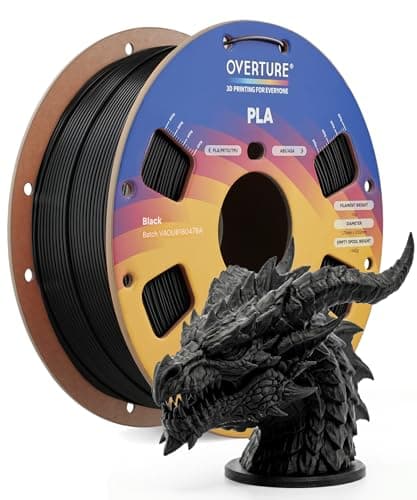 Overture PLAOverture Overture PLAOverture | Best overall | 9.0 | $13.98 - Check price on Amazon |
| 2 |  Polymaker PolyLite PLAPolymaker Polymaker PolyLite PLAPolymaker | Best documented | 8.7 | Check price on Amazon |
| 3 | 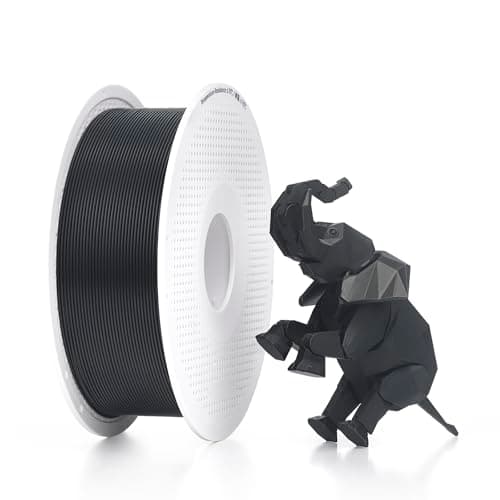 Bambu Lab PLA BasicBambu Lab Bambu Lab PLA BasicBambu Lab | Best if you own a Bambu | 8.6 | $24.79 - Check price on Amazon |
| 4 | 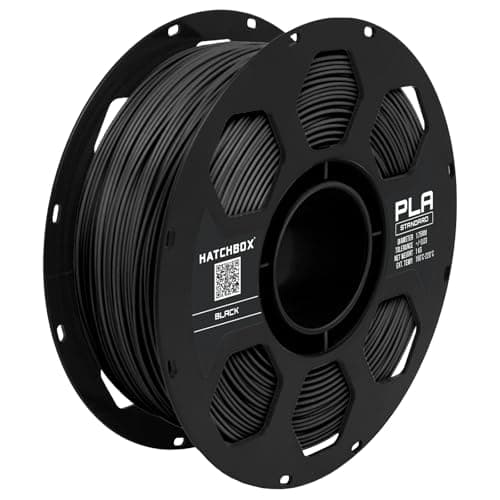 HATCHBOX PLAHATCHBOX HATCHBOX PLAHATCHBOX | Best for an older printer | 8.4 | $21.99 - Check price on Amazon |
#1 · Best overall
Overture PLA
Overture · Your first spool, and your tenth
The default answer to 'what filament should I buy'. A tight published diameter tolerance, a conventional temperature range every printer profile already expects, and it is sold everywhere. Nothing about it is exciting, which is the point.
#ad Price as of September 21, 2026, from Amazon. Prices change. How we make money.
What it actually is
PLA is the plastic beginners should print. It is stiff, it needs no enclosure, it barely smells, and it sticks to a plate at low temperatures. This is a mainstream 1 kg spool of it.
Does it fit this page?
Overture publishes a +/- 0.02 mm dimensional accuracy figure - the tightest of the four here - along with a 190-220 C nozzle range and a 25-60 C bed. It also states that spools are dried before packing and vacuum sealed, which is the packaging detail that decides whether your first print works. Widely stocked and near the bottom of the price range.
What the manufacturer states
| Figure | Value | Source |
|---|---|---|
| Diameter | 1.75 mm | Overture published product specification |
| Dimensional accuracy | +/- 0.02 mm | Overture published product specification |
| Spool weight | 1 kg (2.2 lb) | Overture published product specification |
| Recommended nozzle temperature | 190 - 220 C | Overture published product specification |
| Recommended bed temperature | 25 - 60 C | Overture published product specification |
| Packaging | Dried before packing and vacuum sealed | Overture published product specification |
Read from Overture, PLA filament product page on 2026-09-01. Where a manufacturer does not publish a figure, there is no row for it here.
What is good about it
- +/- 0.02 mm published tolerance, which is as tight as mainstream PLA is quoted
- 190 - 220 C is squarely inside every stock PLA profile you will meet
- A 25 - 60 C bed range means it will stick even on an unheated or barely warm plate
- Vacuum sealed with desiccant, so a spool bought in advance is still dry when it arrives
What is not
- PLA softens in a hot car or a sunny window — this is a property of the material, not the brand
- Not the cheapest per kilogram once you start printing seriously
- Color consistency between batches of any budget filament is a real thing
- No filament is a fix for a machine that is not leveled
Skip this one if
Skip it if the part you are making will live outdoors or in a car. That is a PETG job, not a PLA one, and no PLA brand changes that.
What we cannot tell you
We have not printed this filament. Batch-to-batch color consistency and how it behaves after a year in a cupboard are things only repeated use reveals.
How it scored for a beginner
- Ease for a beginner9.5
- Published tolerance9.5
- Availability9.5
- Value per kilogram8.0
Beginner fit 9.0 / 10. That is our editorial read of how well this suits someone buying their first printer, taken off the published specifications — not a test result, and not a verdict on absolute quality. It is deliberately not marked up as a rating in this page’s structured data. How we pick.
#2 · Best documented
Polymaker PolyLite PLA
Polymaker · A print you do not want to repeat
The spool to buy when a print matters. Polymaker publishes a proper technical data sheet rather than a marketing bullet list, and a wider 190 - 230 C window gives you room to raise the temperature when a layer is not bonding.
#ad We do not hold a current price for this product, so we do not show one. How we make money.
What it actually is
A mainstream PLA from a manufacturer that publishes full technical data sheets for its materials. Same plastic family as any other PLA; the difference is documentation and consistency rather than chemistry.
Does it fit this page?
Polymaker publishes proper technical data sheets rather than a bullet list: 190-230 C extrusion, 25-60 C bed, a suggested 40-60 mm/s and a stated +/- 0.05 mm diameter tolerance. If something goes wrong, Polymaker is the brand most likely to have already published the number you need.
What the manufacturer states
| Figure | Value | Source |
|---|---|---|
| Diameter | 1.75 mm (+/- 0.05 mm) | Polymaker PolyLite PLA technical data sheet |
| Spool weight | 1 kg | Polymaker PolyLite PLA technical data sheet |
| Extrusion temperature | 190 - 230 C | Polymaker PolyLite PLA technical data sheet |
| Bed temperature | 25 - 60 C | Polymaker PolyLite PLA technical data sheet |
| Suggested printing speed | 40 - 60 mm/s | Polymaker PolyLite PLA technical data sheet |
Read from Polymaker, PolyLite PLA technical data sheet on 2026-09-01. Where a manufacturer does not publish a figure, there is no row for it here.
What is good about it
- Polymaker publishes a full technical data sheet, which is rarer in filament than it should be
- 190 - 230 C is a wider usable window than most PLA quotes, which helps with layer bonding
- Consistent enough that a working profile tends to keep working on the next spool
- Widely stocked, so replacing a color mid-project is realistic
What is not
- The published diameter tolerance is +/- 0.05 mm, looser than Overture's quoted +/- 0.02 mm
- Costs more per kilogram than the budget spools
- The suggested 40 - 60 mm/s speed is conservative for a printer rated at 500 mm/s
- Still PLA, with all of PLA's heat limits
Skip this one if
Skip it if you are printing your first Benchy and learning what the buttons do. Buy the cheaper spool, make your mistakes on it, and save this for the print you actually care about.
What we cannot tell you
We have not printed this filament. Real-world spool-to-spool variation and how the published speed range holds up on a fast machine need testing we have not done.
How it scored for a beginner
- Ease for a beginner9.0
- Published tolerance8.0
- Availability9.0
- Value per kilogram7.5
Beginner fit 8.7 / 10. That is our editorial read of how well this suits someone buying their first printer, taken off the published specifications — not a test result, and not a verdict on absolute quality. It is deliberately not marked up as a rating in this page’s structured data. How we pick.
#3 · Best if you own a Bambu
Bambu Lab PLA Basic
Bambu Lab · A Bambu Lab printer's first spool
The one spool that removes a variable if you own a Bambu machine: the printer reads the spool's tag and loads the right profile, so a failed first layer is definitely not a settings problem. Buy it once, then buy refills.
#ad Price as of September 21, 2026, from Amazon. Prices change. How we make money.
What it actually is
Bambu Lab's own house PLA. The spool carries a tag the printer reads, so temperature and flow settings are applied without you choosing anything. Refills are the same filament without the reusable spool.
Does it fit this page?
The argument here is not the plastic, it is the integration. Bambu publishes a 190-230 C nozzle, a 35-45 C bed and under 300 mm/s, and the spool carries an RFID tag the printer reads so the profile is set for you. Costs meaningfully more per kilogram than Overture, and that premium buys convenience rather than better plastic.
What the manufacturer states
| Figure | Value | Source |
|---|---|---|
| Diameter | 1.75 mm | Bambu Lab PLA Basic technical data sheet |
| Spool weight | 1 kg | Bambu Lab PLA Basic technical data sheet |
| Nozzle temperature | 190 - 230 C | Bambu Lab PLA Basic technical data sheet |
| Bed temperature | 35 - 45 C | Bambu Lab PLA Basic technical data sheet |
| Printing speed | Less than 300 mm/s | Bambu Lab PLA Basic technical data sheet |
Read from Bambu Lab, PLA Basic product page and technical data sheet on 2026-09-01. Where a manufacturer does not publish a figure, there is no row for it here.
What is good about it
- The spool tag means the printer picks the profile, so settings stop being a possible cause of failure
- Bambu Lab publishes a technical data sheet with the actual numbers on it
- A low 35 - 45 C bed range, which is gentle on textured PEI plates
- Refills exist, so you are not buying a plastic spool every kilogram
What is not
- Costs more per kilogram than a generic spool of the same plastic
- The tag reading only helps on a Bambu machine — on anything else it is ordinary PLA
- Published speed guidance is under 300 mm/s, below the printer's own rated maximum
- Refills need a spool you already own, so the first purchase has to be the spooled version
Skip this one if
Skip it if you do not own a Bambu printer. Everything you are paying extra for is the tag, and on any other machine the tag does nothing.
What we cannot tell you
We have not printed this filament. Whether the tagged profile is genuinely better than a well-tuned generic profile is not something a data sheet settles.
How it scored for a beginner
- Ease for a beginner10.0
- Published tolerance8.5
- Availability8.0
- Value per kilogram6.5
Beginner fit 8.6 / 10. That is our editorial read of how well this suits someone buying their first printer, taken off the published specifications — not a test result, and not a verdict on absolute quality. It is deliberately not marked up as a rating in this page’s structured data. How we pick.
#4 · Best for an older printer
HATCHBOX PLA
HATCHBOX · An older or slower printer
The long-standing default in a lot of American workshops. A slightly looser published tolerance than Overture and a lower quoted temperature window, which suits older printers with modest hot ends.
#ad Price as of September 21, 2026, from Amazon. Prices change. How we make money.
What it actually is
A 1 kg spool of standard PLA from one of the brands that has been on this shelf the longest. It arrives vacuum sealed with desiccant.
Does it fit this page?
HATCHBOX publishes a lower 180-210 C extrusion range than the others, which suits a slower or older machine that is not pushing a lot of plastic through quickly. Tolerance is published at +/- 0.03 mm and spools are vacuum sealed with desiccant. Long-established and easy to find.
What the manufacturer states
| Figure | Value | Source |
|---|---|---|
| Diameter | 1.75 mm | HATCHBOX published product specification |
| Dimensional accuracy | +/- 0.03 mm | HATCHBOX published product specification |
| Spool weight | 1 kg | HATCHBOX published product specification |
| Recommended extrusion temperature | 180 - 210 C | HATCHBOX published product specification |
| Packaging | Vacuum sealed with desiccant | HATCHBOX published product specification |
Read from HATCHBOX, PLA filament product specification on 2026-09-01. Where a manufacturer does not publish a figure, there is no row for it here.
What is good about it
- A 180 - 210 C window suits printers whose hot ends are not happy running hot
- Vacuum sealed with desiccant, so it survives sitting in a cupboard before you get to it
- Very widely stocked in the United States, in a lot of colors
- A known quantity — a great many printer profiles were originally tuned on it
What is not
- +/- 0.03 mm published tolerance is looser than Overture's quoted +/- 0.02 mm
- The quoted temperature ceiling of 210 C is low if you are chasing layer strength
- Not aimed at the very high speeds current machines advertise
- Nothing here is better than the alternatives; it is equivalent and familiar
Skip this one if
Skip it if your printer is a current fast machine and you want to use its speed. The published temperature range is conservative for that, and a filament sold as high-speed PLA is a better match.
What we cannot tell you
We have not printed this filament. Whether the conservative published temperature range is a limit in practice is a test we have not run.
How it scored for a beginner
- Ease for a beginner9.0
- Published tolerance8.0
- Availability9.5
- Value per kilogram8.0
Beginner fit 8.4 / 10. That is our editorial read of how well this suits someone buying their first printer, taken off the published specifications — not a test result, and not a verdict on absolute quality. It is deliberately not marked up as a rating in this page’s structured data. How we pick.
How these were picked
We have not printed on these machines and we do not pretend to have. What we did was read each manufacturer’s own specification page, take their stated build volume, temperatures and speeds, check that every pick genuinely fits the job in this page’s title, confirm it is still being sold, and pull a live price rather than a remembered one. Every figure names the source it came from, so you can check it yourself in about a minute.
How we pick sets out the full method, including what would change a ranking.
Questions people actually ask
+−Does filament brand actually matter?
Somewhat, and less than storage does. A recognized brand publishes a diameter tolerance and print settings, and packs the spool dry and sealed — those are real advantages. But a cheap spool kept sealed will out-print a premium spool that has absorbed moisture on an open shelf.
+−Is expensive filament worth it?
For standard PLA, usually not. The premium brands are mostly selling convenience — RFID recognition, better documentation, more colors — rather than better plastic. Paying more genuinely pays off in specialist materials, where published print settings and consistency matter much more.
+−Can I use third-party filament in a Bambu printer?
Yes, including in the AMS. You lose the automatic profile that the RFID tag provides, so you set the material type yourself in the slicer or on the screen. That is a small inconvenience rather than a restriction.
+−What diameter tolerance is good?
+/- 0.02 mm is tight and about as good as consumer filament gets. +/- 0.03 mm is good. +/- 0.05 mm is acceptable and will print fine on most machines. A brand publishing no tolerance at all is the thing to be wary of.