Roundup
The Best Bambu Lab 3D Printers
Bambu Lab lists nine printers in its US store. Five of them make sense as a first machine, and the difference between them comes down to three questions you can answer in a minute. Every figure below is Bambu Lab's own published number.
By Scooter M. · Published · Last reviewed
How this page is funded: the buy links below are affiliate links. If you buy through one we earn a commission, at no extra cost to you. It does not change the order of the picks or a word of what we say about them. Full disclosure.
Printers we claim to have tested: 0. Everyone in this category says they tested twenty machines. We have not tested any, and we would rather say so. What we did instead is on this page: the manufacturer’s own published specification for every pick, cited and dated; the arithmetic on what it costs to run, with the inputs shown; a live price rather than a remembered one; and a plain answer on who should skip each machine.
The short answer
Get the Bambu Lab A1 mini. It is the least expensive machine in the lineup that does the thing Bambu Lab is genuinely good at — leveling the bed, setting the Z-offset and calibrating flow without you touching anything. Buy the A1 instead if you can already name something bigger than 180 mm that you want to print, and the P1S or P2S only if you need an enclosure for ABS, ASA or for noise.
That is the whole decision for most people. What follows is the reasoning, the four machines in the lineup that are not first printers, and an honest account of what we cannot tell you because we have not printed on any of them.
What Bambu Lab actually sells right now
This matters more than it should, because the brand releases fast and most of the recommendation lists you will find were written for a lineup that no longer exists. Read on 2026-09-04, Bambu Lab’s US store lists nine printers: the A1 mini, the A1 and the A2L in the open frame A series; the P1S and its replacement the P2S in the enclosed P series; the X2D; and the H2C, H2D and H2S at the top. Refurbished P1S and A1 units are listed separately.
The X1 Carbon is not on that list. For two years it was the machine every “best Bambu” article ended with, so if you land on a page that still recommends one, check the date at the top of it before you trust anything else it says.
Bambu Lab’s own store guidance is unusually blunt about who each machine is for: it points new buyers and schools at the A1 mini as the easiest starting point, calls the A1 and P1S the usual choices for people printing regularly, and says outright that the X2D and the H2 series are built for production and commercial demand. We agree with all of that, which is why this page covers five machines and not nine.
How we picked
Four criteria, applied in this order. They are the same criteria we use on the main beginner roundup, narrowed to one brand.
1. Does it calibrate itself, and is that documented? The three steps that historically ended first attempts are bed leveling, the Z-offset and flow. Every machine on this page automates all three, and Bambu Lab publishes what it automates rather than leaving you to infer it from a marketing video. On the P2S, for example, Bambu Lab’s own manual lists auto bed leveling, high-temperature bed leveling, vibration compensation and nozzle offset calibration by name, and says a faster leveling pass can run before each job.
2. Is the build volume honest for what a first year makes? Volume is the specification people over-buy on hardest. We rank a machine down for size it cannot heat properly and up for a plate that matches its material list.
3. Does the material list match PLA? Your first year is PLA, whatever you currently believe. A machine rated ideal for PLA and PETG is doing its job; a machine that can also run PA and PC is selling you capability you will not use for a long time.
4. What does multi-color actually cost? No Bambu printer prints in more than one color out of the box. The AMS is a separate purchase on every model here, and the Combo bundles are the honest way to compare prices between brands.
One thing we deliberately do not weigh: our own opinion of print quality. We have not run a single print on any of these machines and say so on every page. Everything above is read from Bambu Lab’s published specifications, and the how we pick page sets out exactly what that method can and cannot support.
Three questions that decide which Bambu
How big is the biggest thing you can name? Not imagine — name. The lineup steps 180 mm, then 256 mm, then 330 x 320 x 325 mm. Most first-year printing is desk-sized objects that fit comfortably inside the smallest of those, which is why the A1 mini leads this page rather than the biggest machine in it.
Do you need ABS or ASA, or does it need to be quiet? These are the two reasons to buy an enclosure and they are the only two. Bambu Lab rates the entire A series as unsuitable for ABS, ASA, PC and fiber-reinforced filaments, so no amount of extra build volume in the open-frame range gets you those materials. If a specific project demands them, or if the printer has to run overnight in a room somebody sleeps in, you are in the P series. Our A1 against P1S comparison walks that decision through in detail.
Do you want more than one color on day one? If yes, budget for the Combo rather than the base machine. If you are not sure, buy the base machine — the AMS can be added later, and the multicolor roundup explains the purge waste that comes with it before you commit.
Where the A series and the P series really differ
Two things, and only one of them is about plastic.
The box. An enclosure holds chamber heat, and chamber heat is what stops ABS and ASA peeling off the plate as they cool and contract. It also contains most of the noise and most of the smell. That is the whole benefit, and it is a large benefit to the small number of people who need it.
The motion system. The A series moves the plate back and forth under a head that travels in one axis. The P series keeps the plate still and moves the head in two — CoreXY — which is how it reaches twice the published acceleration of an A-series machine. For a beginner this is a speed difference, not a difficulty difference. Nothing about a P1S or a P2S is easier to learn on than an A1 mini.
Published figures, read from each machine's own Bambu Lab specification page on the dates shown in the sources below.
| Machine | Enclosed? | Build volume | Max plate temp | Published max acceleration |
|---|---|---|---|---|
| Bambu Lab A1 mini | No | 180 x 180 x 180 mm | 80 C | 10,000 mm/s2 |
| Bambu Lab A1 | No | 256 x 256 x 256 mm | 100 C | 10,000 mm/s2 |
| Bambu Lab A2L | No | 330 x 320 x 325 mm | 80 C | 10 m/s2 (10,000 mm/s2) |
| Bambu Lab P1S | Yes | 256 x 256 x 256 mm | 100 C | 20,000 mm/s2 |
| Bambu Lab P2S | Yes | 256 x 256 x 256 mm | 110 C | 20,000 mm/s2 |
The row worth staring at is the A2L’s plate temperature. It is the biggest machine here and it heats to the same 80 C as the smallest, 20 C below the A1 it sits above in the range. Large parts in PETG want a warm plate to stay put, so the extra volume is genuinely most useful in PLA. That is not a defect — it is a machine built to print big PLA objects in one piece, and it does not pretend otherwise in its own material list.
P1S or P2S, if you have decided on an enclosure
Both are enclosed, both give you 256 mm cubed, and both automate the same setup steps. The P2S adds a 110 C plate rather than 100 C, a rated 40 mm3/s flow, a 600 mm/s head, an airflow system Bambu Lab says draws cool air from outside the chamber so low-temperature filaments can be printed with the door closed, and a filter it rates for VOC and particulate filtration.
Those are real improvements and none of them changes what a first year looks like. The P1S is currently the cheaper way into an enclosure and is still listed new, alongside factory refurbished units that Bambu Lab sells with the same warranty as new. If the enclosure is the whole reason you are shopping in this band, the older machine is the buyer-first answer for as long as it is stocked. If you are buying once and keeping it for years, buy the P2S and stop thinking about it.
The prices on both move constantly, and one of them has been discounted heavily since its replacement launched. That is exactly why we do not print a number in this text: the live price sits inside every buy button on this page and it is the one that counts.
One more option worth knowing about, and it is not one we can sell you: Bambu Lab lists factory refurbished P1S and A1 units in its own store, at refurbished prices and, it says, with the same warranty as new. The buy buttons on this page go to Amazon, so if a refurbished machine is what you want, that is a purchase to make direct with the manufacturer. We would rather tell you that than pretend the only route is the one we earn on.
The four machines we did not pick
The X2D is a dual-nozzle printer, and the H2C, H2D and H2S sit above it — larger, and in the H2D’s case a machine that also takes a laser module and a cutting blade. They are interesting and they are not first printers, for a reason that has nothing to do with quality: a second nozzle and a laser are two more systems to learn at the exact moment you are still learning what a first layer should look like. Bambu Lab positions this end of its own range at production and commercial use, and we take the company at its word.
If you are drawn to them anyway, the honest test is whether you can describe a job you have today that needs two materials at once. If you cannot, that money buys a great deal of filament and six months of practice on an A1, which is a faster route to good prints than any machine upgrade.
What we could not check
Everything above is a published figure or a published claim. Here is the list of things that decide whether you like a printer and that no specification page can tell either of us.
Noise, honestly measured. Bambu Lab does not publish a decibel figure for these machines, and “quiet” in a workshop and “quiet” in a bedroom are different words. An enclosure helps. How much, we cannot tell you.
How often the automation needs a human. Every machine here calibrates itself. Whether that means never touching it for a year, or re-running a leveling pass every few weeks, is exactly the sort of thing you learn by owning one for a year.
Long-term reliability. The P2S has a new servo extruder and the A2L a new damping system, and both are too recent for anyone to have honest multi-year data on. Treat any page that claims otherwise with suspicion, including ours if we ever do it.
Whether the AMS jams in your house. Bambu Lab cites a very large number of users as evidence that it does not. That is a reasonable thing for them to say and not a substitute for a spool of third-party filament in your own machine.
What you still have to do yourself
Self-calibration removes the setup steps that used to defeat people. It does not remove the first week. You will still choose where the machine lives, still learn what a good first layer looks like, and still hit the ordinary problems every printer has, so it is worth reading the setup guide before the box arrives rather than after. A machine that levels its own bed is a machine that fails less often, not one that never fails.
Quick picks
Ranked on how well each one fits the job in this page's title, read off the manufacturer's own published specifications. Tap any row for the full write-up, including who should skip it.
| # | Product | Best for | Beginner fit | Price |
|---|---|---|---|---|
| 1 | 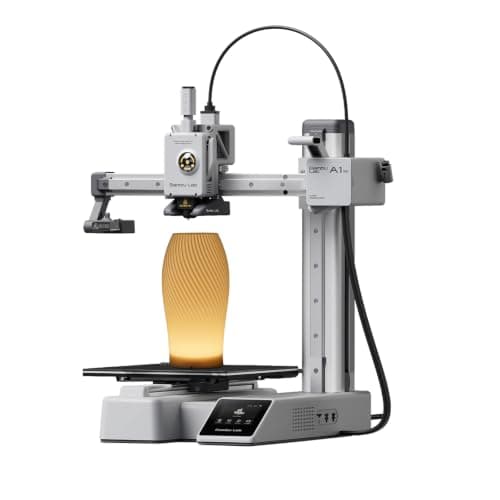 Bambu Lab A1 mini180 x 180 x 180 mm Bambu Lab A1 mini180 x 180 x 180 mm | Best first Bambu | 9.2 | $249.00 - Check price on Amazon |
| 2 | 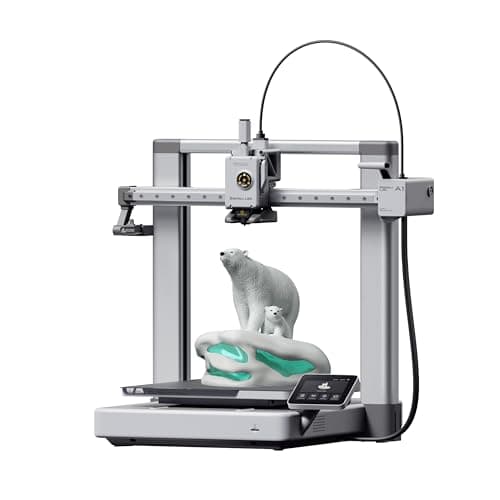 Bambu Lab A1256 x 256 x 256 mm Bambu Lab A1256 x 256 x 256 mm | Best if you want room to grow | 9.0 | $299.99 - Check price on Amazon |
| 3 | 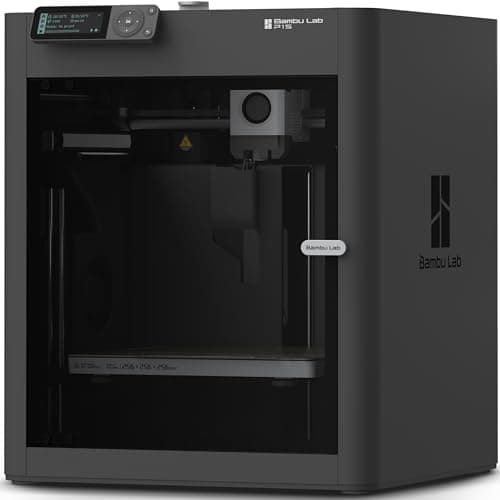 Bambu Lab P1S256 x 256 x 256 mm Bambu Lab P1S256 x 256 x 256 mm | Cheapest way into an enclosure | 8.4 | $399.00 - Check price on Amazon |
| 4 | 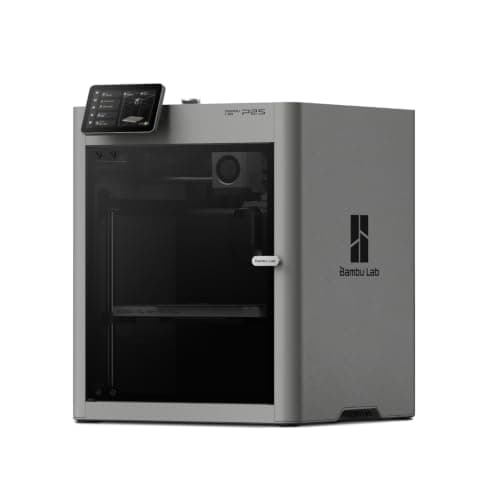 Bambu Lab P2S256 x 256 x 256 mm Bambu Lab P2S256 x 256 x 256 mm | Best enclosed Bambu to buy new | 8.5 | $569.00 - Check price on Amazon |
| 5 |  Bambu Lab A2L330 x 320 x 325 mm Bambu Lab A2L330 x 320 x 325 mm | Most build volume without an enclosure | 8.2 | Check price on Amazon |
#1 · Best first Bambu
Bambu Lab A1 mini
Bambu Lab · A genuine first printer
The one to get if you have never done this before. It calibrates itself before every print — bed mesh, Z-offset, flow, resonance — so the part of 3D printing that used to defeat beginners is a step you never see. The build volume is the price you pay.
#ad Price as of October 20, 2026, from Amazon. Prices change. How we make money.
What it actually is
A small open-frame filament printer. Filament is a 1.75 mm plastic string on a spool; the machine melts it and draws your object one layer at a time. Open-frame means there is no box around it, which is fine for PLA and a limitation for materials that warp.
Does it fit this page?
The cheapest way into the thing Bambu Lab is actually good at: a machine that levels its own bed, sets its own Z-offset and calibrates its own flow before every print. 180 mm cubed is the price of admission, and for a first year it is a smaller price than it looks.
What the manufacturer states
| Figure | Value | Source |
|---|---|---|
| Build volume | 180 x 180 x 180 mm | Bambu Lab A1 mini technical specifications |
| Max hot end temperature | 300 C | Bambu Lab A1 mini technical specifications |
| Max build plate temperature | 80 C | Bambu Lab A1 mini technical specifications |
| Max toolhead speed | 500 mm/s | Bambu Lab A1 mini technical specifications |
| Max toolhead acceleration | 10,000 mm/s2 | Bambu Lab A1 mini technical specifications |
| Filaments rated ideal | PLA, PETG, TPU, PVA | Bambu Lab A1 mini technical specifications |
| Filaments not recommended | ABS, ASA, PC, PA, PET, carbon/glass fiber reinforced | Bambu Lab A1 mini technical specifications |
| Machine dimensions | 347 x 315 x 365 mm | Bambu Lab A1 mini technical specifications |
| Net weight | 5.5 kg | Bambu Lab A1 mini technical specifications |
| Max power | 150 W | Bambu Lab A1 mini technical specifications |
Read from Bambu Lab, A1 mini technical specifications on 2026-09-01. Where a manufacturer does not publish a figure, there is no row for it here.
What is good about it
- Full auto-calibration on every print, per Bambu Lab's own specification — no paper-under-the-nozzle ritual
- Rated ideal for PLA, PETG, TPU and PVA, which covers everything a beginner should print in year one
- 150 W maximum power draw is the lowest of any printer on this site, so running cost is trivial
- 5.5 kg and 347 mm wide — it fits on a desk without rearranging the room
What is not
- 180 mm cubed is genuinely small. A full-size helmet or a large cosplay prop will not fit
- Bambu Lab rates ABS, ASA, PC and fiber-reinforced filaments as not recommended on this machine
- The multi-color AMS lite is a separate purchase, so the headline price is not the multi-color price
- Bambu Lab's own Amazon store lists this machine bundled with an LED lamp kit rather than on its own, so the price on our button is for that bundle. The bare printer is sold direct on Bambu Lab's store
- Open frame, so it is at the mercy of a draft from a window or an air conditioning vent
Skip this one if
Skip it if you already know the thing you want to print is bigger than a shoebox, or if you specifically want ABS or a carbon-fiber-filled filament. Bambu Lab itself lists those materials as not recommended here, and buying a machine you intend to use outside its rated envelope is how a first printer becomes a frustrating one.
What we cannot tell you
We have not printed on this machine. Long-term reliability, real-world noise in a quiet room, and how the textured plate holds up after a year are all things we cannot honestly report without owning one.
How it scored for a beginner
- Setup out of the box9.5
- Auto-calibration10.0
- First-layer forgiveness9.5
- Parts and filament availability9.0
- Running cost10.0
- Help when it goes wrong9.0
Beginner fit 9.2 / 10. That is our editorial read of how well this suits someone buying their first printer, taken off the published specifications — not a test result, and not a verdict on absolute quality. It is deliberately not marked up as a rating in this page’s structured data. How we pick.
#2 · Best if you want room to grow
Bambu Lab A1
Bambu Lab · A first printer you will not outgrow
The A1 mini's larger sibling, and the better buy the moment you have a specific large thing in mind. Same self-calibration, 256 mm cubed instead of 180, and a 100 C bed rather than 80 C — which is the spec that actually widens what you can print.
#ad Price as of October 20, 2026, from Amazon. Prices change. How we make money.
What it actually is
The full-size version of the A1: same open-frame layout, same automatic calibration, a bigger bed and a hotter one. The extra bed temperature matters because materials that shrink as they cool need a warm plate to stay stuck to it.
Does it fit this page?
The same automation with 256 mm cubed instead of 180 and a 100 C plate instead of 80 C. That plate temperature, not the extra volume, is the specification that widens what you can realistically print.
What the manufacturer states
| Figure | Value | Source |
|---|---|---|
| Build volume | 256 x 256 x 256 mm | Bambu Lab A1 technical specifications |
| Max hot end temperature | 300 C | Bambu Lab A1 technical specifications |
| Max build plate temperature | 100 C | Bambu Lab A1 technical specifications |
| Max toolhead speed | 500 mm/s | Bambu Lab A1 technical specifications |
| Max toolhead acceleration | 10,000 mm/s2 | Bambu Lab A1 technical specifications |
| Filaments rated ideal | PLA, PETG, TPU, PVA | Bambu Lab A1 technical specifications |
| Machine dimensions | 465 x 410 x 430 mm | Bambu Lab A1 technical specifications |
| Net weight | 8.3 kg | Bambu Lab A1 technical specifications |
| Max power | 350 W at 110 V | Bambu Lab A1 technical specifications |
Read from Bambu Lab, A1 technical specifications on 2026-09-01. Where a manufacturer does not publish a figure, there is no row for it here.
What is good about it
- 256 mm cubed covers almost everything a first-year printer is asked to make
- 100 C bed rather than the mini's 80 C, which is the difference that makes larger PETG parts stick
- Identical hands-off calibration to the A1 mini, so nothing gets harder as the machine gets bigger
- Bambu Lab publishes a full specification sheet, so every number on this page is checkable in a minute
What is not
- 465 mm wide and 8.3 kg — it needs a dedicated shelf, not a corner of a desk
- 350 W at US voltage against the mini's 150 W, so it costs meaningfully more to run
- Still open-frame, so the material limits are the same as the mini's despite the hotter bed
- Multi-color is again a separate AMS lite purchase
Skip this one if
Skip it if your desk is the only place it can go and you have not measured that desk. It is nearly half a meter wide. If you are unsure whether you will use the extra volume, the mini is the cheaper mistake.
What we cannot tell you
We have not printed on this machine. Noise at full speed, long-term belt and rod wear, and how often the auto-calibration actually needs intervention are all beyond what a specification sheet can tell you.
How it scored for a beginner
- Setup out of the box9.5
- Auto-calibration10.0
- First-layer forgiveness9.5
- Parts and filament availability9.0
- Running cost8.0
- Help when it goes wrong9.0
Beginner fit 9.0 / 10. That is our editorial read of how well this suits someone buying their first printer, taken off the published specifications — not a test result, and not a verdict on absolute quality. It is deliberately not marked up as a rating in this page’s structured data. How we pick.
#3 · Cheapest way into an enclosure
Bambu Lab P1S
Bambu Lab · A first printer for someone who already knows they want ABS or ASA
An enclosed CoreXY machine, which is a different class of thing from an A1: the bed stays still and the box holds heat, so the materials the A1 refuses become possible. It is more printer than a first-timer needs, and the right answer if you already know you want ABS.
#ad Price as of October 20, 2026, from Amazon. Prices change. How we make money.
What it actually is
A boxed printer using CoreXY motion — the print head moves in two axes while the bed only goes up and down. Keeping the bed still lets it move faster, and the enclosure keeps the chamber warm so plastics that shrink as they cool do not peel off the plate.
Does it fit this page?
The outgoing enclosed model, still listed and still the least expensive route to a Bambu with a box around it. Buy it if the enclosure is the whole reason you are here and you do not need what the P2S adds on top.
What the manufacturer states
| Figure | Value | Source |
|---|---|---|
| Build volume | 256 x 256 x 256 mm | Bambu Lab P1S technical specifications |
| Enclosure | Enclosed, plastic and glass | Bambu Lab P1S technical specifications |
| Max hot end temperature | 300 C | Bambu Lab P1S technical specifications |
| Max build plate temperature | 100 C | Bambu Lab P1S technical specifications |
| Max speed | 500 mm/s | Bambu Lab P1S technical specifications |
| Max acceleration | 20,000 mm/s2 | Bambu Lab P1S technical specifications |
| Nozzle | All-metal hot end, 0.4 mm included; 0.2, 0.6 and 0.8 mm optional | Bambu Lab P1S technical specifications |
| Filaments rated ideal | PLA, PETG, TPU, PVA, PET, ABS, ASA | Bambu Lab P1S technical specifications |
| Filaments rated capable | PA, PC | Bambu Lab P1S technical specifications |
| Air filter | Activated carbon | Bambu Lab P1S technical specifications |
| Physical dimensions | 389 x 389 x 458 mm | Bambu Lab P1S technical specifications |
| Net weight | 12.95 kg | Bambu Lab P1S technical specifications |
| Max power | 350 W at 110 V | Bambu Lab P1S technical specifications |
Read from Bambu Lab, P1S product page and specification table on 2026-09-06. Where a manufacturer does not publish a figure, there is no row for it here.
What is good about it
- Enclosed, so ABS and ASA are on the menu rather than off it
- CoreXY at 20,000 mm/s2 acceleration — twice the A1's rated figure
- Same 256 mm cubed volume as the A1 in a smaller footprint, because the bed does not travel
- The enclosure also contains most of the noise and the smell, which matters if it lives in a room you sit in
What is not
- Noticeably more expensive than an A1 for a beginner who will print PLA for a year
- The enclosure makes routine maintenance fiddlier than an open frame
- Nothing about it is easier to learn on than an A1 mini — it is just more capable
- Multi-color is again a separate AMS purchase
Skip this one if
Skip it if your honest answer to 'what will you print' is 'I am not sure yet'. Everything the P1S adds over an A1 is aimed at materials a beginner should not start with. Buy it when a specific project demands ABS, not before.
What we cannot tell you
We have not printed on this machine. Chamber temperature in a cold room, real ABS warping behavior and long-term fan noise are not on any specification sheet.
How it scored for a beginner
- Setup out of the box8.5
- Auto-calibration9.5
- First-layer forgiveness9.0
- Parts and filament availability9.0
- Running cost7.0
- Help when it goes wrong9.0
Beginner fit 8.4 / 10. That is our editorial read of how well this suits someone buying their first printer, taken off the published specifications — not a test result, and not a verdict on absolute quality. It is deliberately not marked up as a rating in this page’s structured data. How we pick.
#4 · Best enclosed Bambu to buy new
Bambu Lab P2S
Bambu Lab · An enclosed printer bought to keep, not to learn on
The P1S rebuilt: the same 256 mm cubed enclosed box, a hotter plate, a faster head and a cooling system that draws outside air so the door can stay shut on PLA. It is the enclosed Bambu to buy if you are buying one to keep, and it is still more machine than a first month needs.
#ad Price as of October 20, 2026, from Amazon. Prices change. How we make money.
What it actually is
An enclosed CoreXY printer — the head moves in two axes while the plate only rises, and a box surrounds the whole thing. The box holds heat, which is what keeps plastics that shrink as they cool stuck to the plate, and it holds most of the noise and smell as well.
Does it fit this page?
The P1S's replacement: a 110 C plate, a rated 40 mm3/s flow and an airflow system Bambu Lab says lets you print low-temperature filaments with the door shut. It is the enclosed machine to buy if you are buying one to keep for years.
What the manufacturer states
| Figure | Value | Source |
|---|---|---|
| Build volume | 256 x 256 x 256 mm | Bambu Lab P2S technical specifications |
| Enclosure | Enclosed; plastic and glass outer frame, plastic and steel chassis | Bambu Lab P2S technical specifications |
| Max nozzle temperature | 300 C | Bambu Lab P2S technical specifications |
| Max heatbed temperature | 110 C | Bambu Lab P2S technical specifications |
| Max toolhead speed | 600 mm/s | Bambu Lab P2S technical specifications |
| Max toolhead acceleration | 20,000 mm/s2 | Bambu Lab P2S technical specifications |
| Max hot end flow | 40 mm3/s | Bambu Lab P2S technical specifications |
| Nozzle | Hardened steel, 0.4 mm included; 0.2, 0.6 and 0.8 mm supported | Bambu Lab P2S technical specifications |
| Filaments supported | PLA, PETG, ABS, ASA, TPU, PET, PA, PC, PVA and carbon or glass fiber reinforced grades | Bambu Lab P2S technical specifications |
| Filtration | Activated carbon; VOC and particulate filtration supported | Bambu Lab P2S technical specifications |
| Physical dimensions | 392 x 406 x 478 mm | Bambu Lab P2S technical specifications |
| Net weight | 14.9 kg | Bambu Lab P2S technical specifications |
| Max power | 1000 W at 110 V | Bambu Lab P2S technical specifications |
Read from Bambu Lab, P2S technical specifications on 2026-09-04. Where a manufacturer does not publish a figure, there is no row for it here.
What is good about it
- Enclosed, with an activated carbon filter Bambu Lab rates for VOC and particulate filtration — the version of ABS printing that belongs in a room you sit in
- The Adaptive Airflow System draws cool air from outside the chamber, so Bambu Lab states low-temperature filaments can be printed with the door closed
- A 110 C plate against the P1S's 100 C and a rated 40 mm3/s flow, so large parts in engineering plastics are less of a gamble
- Auto bed leveling, nozzle offset and flow calibration are all documented and automatic, so nothing about setup is harder than an A1's
What is not
- It is the most expensive machine on this site's beginner shortlist, and every advantage it holds is aimed at materials a first year does not reach
- 1000 W at 110 V while the plate heats — several times the draw of an A1 mini, and worth knowing before it shares a circuit with a space heater
- 14.9 kg and 478 mm tall, so it is a shelf machine rather than a desk machine
- Multi-color still means buying the AMS 2 Pro, so the headline price is not the multi-color price
Skip this one if
Skip it if you have not yet printed anything. The P2S is a better machine than an A1 in every measurable way and not a better first machine, because almost none of what it adds shows up in PLA. Buy it when a project names ABS, ASA or a fiber-filled filament out loud.
What we cannot tell you
We have not printed on this machine. How quiet it really is with the door shut, whether the carbon filter meaningfully changes the smell of ABS in a small room, and how the servo extruder holds up over a year are not answerable from a specification sheet.
How it scored for a beginner
- Setup out of the box8.5
- Auto-calibration9.5
- First-layer forgiveness9.0
- Parts and filament availability9.0
- Running cost6.5
- Help when it goes wrong9.0
Beginner fit 8.5 / 10. That is our editorial read of how well this suits someone buying their first printer, taken off the published specifications — not a test result, and not a verdict on absolute quality. It is deliberately not marked up as a rating in this page’s structured data. How we pick.
#5 · Most build volume without an enclosure
Bambu Lab A2L
Bambu Lab · One large PLA part, printed in one piece
The big open-frame Bambu. 330 x 320 x 325 mm is the largest build volume in the lineup that does not arrive wrapped in a box, and the tradeoff is an 80 C plate — the same ceiling as the little A1 mini, on a machine several times the volume.
#ad We do not hold a current price for this product, so we do not show one. How we make money.
What it actually is
A full-size open-frame printer with a moving bed. It runs the same self-calibrating A-series software and the same PLA-first material list as its smaller siblings; what it adds is floor area, and what it does not add is heat retention.
Does it fit this page?
330 x 320 x 325 mm, the largest open-frame plate Bambu Lab sells, for the one person in ten who can already name a large object. The 80 C plate ceiling is the catch, and it is a real one.
What the manufacturer states
| Figure | Value | Source |
|---|---|---|
| Build volume | 330 x 320 x 325 mm | Bambu Lab A2L technical specifications |
| Max nozzle temperature | 300 C | Bambu Lab A2L technical specifications |
| Max heatbed temperature | 80 C | Bambu Lab A2L technical specifications |
| Max toolhead speed | 500 mm/s | Bambu Lab A2L technical specifications |
| Max toolhead acceleration | 10 m/s2 | Bambu Lab A2L technical specifications |
| Max hot end flow | 28 mm3/s with Bambu Lab PLA Basic | Bambu Lab A2L technical specifications |
| Filaments supported | PLA, PETG, TPU, PVA; PLA-CF and PETG-CF with a hardened steel nozzle | Bambu Lab A2L technical specifications |
| Nozzle | Stainless steel; 0.2, 0.4, 0.6 and 0.8 mm supported | Bambu Lab A2L technical specifications |
| Physical dimensions | 544 x 529 x 505 mm | Bambu Lab A2L technical specifications |
| Net weight | 12.8 kg | Bambu Lab A2L technical specifications |
| Max power | 1000 W at 110 V | Bambu Lab A2L technical specifications |
| Working temperature | 15 - 30 C | Bambu Lab A2L technical specifications |
Read from Bambu Lab, A2L technical specifications on 2026-09-04. Where a manufacturer does not publish a figure, there is no row for it here.
What is good about it
- 330 x 320 x 325 mm — Bambu Lab's own claim is 105 percent more space than a 256 mm class machine, which is the difference between one helmet and four glued sections
- The same self-calibrating A-series behavior, so the extra size arrives without extra setup
- Bambu Lab states the vibration model is re-tuned as the load on the bed changes, which is the specific thing that goes wrong on tall prints on a moving bed
- Open frame, so it stays a PLA machine — which for a first printer is a feature rather than a limit
What is not
- An 80 C maximum plate temperature, the same as the A1 mini and 20 C below the A1, so large PETG parts are harder here than on the smaller machine
- 544 x 529 mm of desk before the spool and the AMS. Measure the surface first
- 1000 W at 110 V — the price of heating a plate that size
- Bambu Lab rates it for PLA, PETG, TPU and PVA only, so nothing about the extra volume unlocks ABS or ASA
Skip this one if
Skip it unless you can name the large object. Almost every first-year print fits inside 256 mm, and people who buy for a hypothetical helmet spend a year printing brackets on a machine that took half a desk. If your list is ordinary desk-sized objects, buy the A1 and spend the difference on filament.
What we cannot tell you
We have not printed on this machine. Whether an open frame that size holds a first layer across the full plate in a room with a draft, and how loud a bed that big is at speed, are things only a unit in a room can answer.
How it scored for a beginner
- Setup out of the box9.0
- Auto-calibration9.5
- First-layer forgiveness8.5
- Parts and filament availability9.0
- Running cost6.5
- Help when it goes wrong8.5
Beginner fit 8.2 / 10. That is our editorial read of how well this suits someone buying their first printer, taken off the published specifications — not a test result, and not a verdict on absolute quality. It is deliberately not marked up as a rating in this page’s structured data. How we pick.
How these were picked
We have not printed on these machines and we do not pretend to have. What we did was read each manufacturer’s own specification page, take their stated build volume, temperatures and speeds, check that every pick genuinely fits the job in this page’s title, confirm it is still being sold, and pull a live price rather than a remembered one. Every figure names the source it came from, so you can check it yourself in about a minute.
How we pick sets out the full method, including what would change a ranking.
Questions people actually ask
+−Which Bambu Lab printer is best for a beginner?
The A1 mini. It automates bed leveling, Z-offset and flow calibration, Bambu Lab rates it ideal for PLA, PETG, TPU and PVA, and Bambu Lab publishes a 150 W maximum power draw for it, the lowest of any printer on this site. Its 180 mm cubed build volume is the one real compromise, and it is smaller than most first-year prints need.
+−Is the P1S still worth buying now that the P2S exists?
Yes, if the enclosure is the only thing you are buying. Both give you 256 mm cubed inside a box with the same automated setup. The P2S adds a hotter plate, a faster head, more rated flow, better filtration and a redesigned airflow system, and none of that changes what your first year of PLA looks like. Buy the P1S while it is stocked and cheaper; buy the P2S if you want the machine you will still be using in five years.
+−Do I need the Combo version with the AMS?
Only if you want multiple colors in a single print. No Bambu printer does that out of the box — the A series takes the AMS lite and the P series takes the AMS or AMS 2 Pro, and each is a separate purchase or a Combo bundle. Multi-color also produces purge waste on every filament change, so it is worth understanding the tradeoff before paying for it.
+−Is the A2L just a bigger A1?
Not exactly. It is bigger — 330 x 320 x 325 mm against 256 mm cubed — and it keeps the A-series automation, but its maximum plate temperature is 80 C rather than the A1’s 100 C. In practice that makes it a large PLA machine rather than a scaled-up version of the A1 in every respect.
+−Can a Bambu Lab printer print ABS?
Only the enclosed ones. Bambu Lab lists ABS, ASA, PC, PA and fiber-reinforced filaments as not recommended on the A series, and lists them as supported on the P2S. If ABS is a requirement rather than a curiosity, that single line decides your purchase.