Roundup
The Best Enclosed 3D Printers
A box around a printer is not a quality upgrade. It is a materials upgrade and a noise-and-smell upgrade, and it is worth real money to the people who need those two things and nothing at all to everybody else.
By Scooter M. · Published · Last reviewed
How this page is funded: the buy links below are affiliate links. If you buy through one we earn a commission, at no extra cost to you. It does not change the order of the picks or a word of what we say about them. Full disclosure.
Printers we claim to have tested: 0. Everyone in this category says they tested twenty machines. We have not tested any, and we would rather say so. What we did instead is on this page: the manufacturer’s own published specification for every pick, cited and dated; the arithmetic on what it costs to run, with the inputs shown; a live price rather than a remembered one; and a plain answer on who should skip each machine.
The short answer
Buy the Bambu Lab P2S. It publishes the most useful combination here: a 110 °C plate, a carbon filter rated for VOC and particulate filtration, and cooling that draws air from outside the chamber so PLA prints with the door closed. If price is the constraint, the Elegoo Centauri Carbon publishes a higher ceiling for less, with a shorter track record behind it.
Before the picks, the part most of these lists skip: what the box is actually for, and why most people asking this question do not need one.
What an enclosure buys, and what it costs
It makes warping materials printable. ABS, ASA, polycarbonate and nylon contract measurably as they cool. On an open frame the lower layers of a tall part have already shrunk while the top is still going down hot, and the corners lift off the plate. A warm chamber slows that cooling so the part contracts evenly. This is the whole engineering argument, and no slicer setting substitutes for it.
It contains noise and smell. Frequently the real reason people buy one. A printer running overnight in a studio flat is a different proposition inside a box, and ABS in particular emits a noticeable odor — Bambu Lab says plainly that the P1S filter exists because filaments such as ABS emit odors while printing.
What it costs you: money, desk space, weight, and a mild disadvantage on PLA. PLA prefers to be cooled quickly, so a warm chamber is slightly counterproductive for the material you will use most. Enclosed machines vent for exactly this reason, which is another way of saying the enclosure is switched off for your first year.
How we picked
Four criteria, applied in this order. Every figure below is the manufacturer’s own published number, and we have not printed on any of these machines.
1. Can it actually hold the materials it claims? The two numbers that decide this are the maximum plate temperature and whether the chamber is warmed deliberately or only incidentally. A machine that lists ABS but publishes an 80 °C plate is listing an aspiration.
2. Does it deal with the air? A filter is not a luxury on an enclosed machine running ABS. We ranked up the machines that publish one and said so where a manufacturer does not.
3. Is the setup still automated? An enclosure must not cost you the auto-calibration that makes modern printers usable. All four automate bed leveling and flow; we would not list one that did not.
4. What happens when it goes wrong? Weighted deliberately. At eleven at night what you want is somebody who has had your exact failure on your exact machine and written down the fix. That is a real advantage for the established platforms and a real disadvantage for the newest one.
Published figures, read from each manufacturer's own page. Bambu and Elegoo figures read 2026-09-06; Prusa figures read 2026-09-13.
| Machine | Build volume | Max plate | Chamber | Air handling |
|---|---|---|---|---|
| Bambu Lab P2S | 256 x 256 x 256 mm | 110 C | 50 C, flap-controlled | Activated carbon, VOC + particulate |
| Elegoo Centauri Carbon | 256 x 256 x 256 mm | 110 C at 25 C ambient | Enclosed, not published | Not published |
| Bambu Lab P1S | 256 x 256 x 256 mm | 100 C | Regulator fan | Activated carbon |
| Prusa CORE One+ | 250 x 220 x 270 mm | Not published on the product page | Actively heated to 55 C | Optional HEPA |
Where a cell says not published, that is literal. Elegoo does not state a chamber temperature on the Centauri Carbon’s specification sheet and Prusa does not print a plate maximum on the CORE One+ product page. We would rather show the gap than fill it from somewhere else.
The enclosure is not the only thing that changed
Two of these machines are meaningfully different from the other two in a way the table does not capture.
Passive versus active chambers. The Bambu and Elegoo machines hold heat that the plate and the motion system generate. Prusa heats the chamber deliberately and monitors it. For the materials at the far end — polycarbonate, nylon — that difference is real. For ABS and ASA, a passively warm box is usually enough.
Fiber-filled filament. Elegoo lists carbon and glass fiber reinforced filaments as supported on the Centauri Carbon and ships a hardened steel nozzle. Bambu Lab states that fiber-reinforced filament is not recommended on the P1S without an extruder and hot end upgrade, though it does list the grades for the P2S. If fiber is your reason for buying, read that sentence twice before ordering.
Four questions that decide which one
1. Which materials, specifically? ABS and ASA are comfortably within all four. Polycarbonate and nylon want an actively heated chamber rather than a passively warm one, which narrows it to the Prusa. Carbon and glass fiber grades want a hardened nozzle and a manufacturer that says yes — Elegoo does for the Centauri Carbon, and Bambu Lab does for the P2S but explicitly not for the P1S without an upgrade.
2. Where does it live? If the answer is a bedroom, an office or a studio flat, the air handling row in the table above is the most important one on this page. A carbon filter is the difference between printing ABS in a room you sit in and not.
3. How do you want to solve problems? When a print fails at eleven at night, do you want a manufacturer process or a forum thread? Bambu Lab and Prusa both have large communities; the Centauri Carbon is a newer platform with less written about it.
4. How long are you keeping it? If the honest answer is two years, buy the cheapest machine that does the job. If it is ten, the repairability Prusa puts in writing starts to look like a rational purchase rather than a premium.
What an enclosure does not fix
Worth stating plainly, because people expect more from the box than it delivers.
It does not improve PLA prints. If anything it marginally complicates them, since PLA wants fast cooling. A PLA part off an enclosed machine and the same part off a good open-frame machine are much the same object.
It does not make the machine silent. It attenuates noise; it does not remove it. Steppers, fans and belt movement are still audible, and only one manufacturer here publishes a decibel figure at all.
It does not fix wet filament. ABS and ASA are hygroscopic and a warm chamber does nothing about moisture already in the spool. Polymaker publishes 70 °C for six hours as the drying routine for both — storage and drying covers what that means in practice.
It does not remove the smell entirely. A carbon filter adsorbs a share of what ABS emits, and it saturates over time. Ventilation still matters, and the filter is a consumable rather than a permanent fitting.
What the box actually unlocks
Concretely, because “engineering materials” is a phrase that means nothing until it is a list of objects.
Parts that live in a car. A phone mount, a cup insert, a dash bracket. PLA deforms on a summer dashboard; ABS and ASA do not. This is the single most common reason people outgrow an open-frame machine.
Parts that live outside. Garden sensor housings, fence brackets, mounts on a shed. That is ASA specifically, because ABS goes chalky in sunlight — ABS against ASA covers the distinction.
Parts you intend to finish properly. ABS sands without gumming and bonds with solvent, so seams can genuinely disappear. That is why prop and model makers still reach for it long after PETG became easier, and why an enclosure matters for cosplay work.
Parts that must not soften near heat. Brackets near a radiator, an enclosure on top of a warm appliance, anything in an attic in August.
If none of those describes something you actually want to make, that is the clearest signal available that the box is not yet worth buying.
What to print first on an enclosed machine
PLA, for a week, with the door closed if your machine allows it. It sounds like a waste of an expensive printer and it is the fastest route to a reliable one: you learn the plate, the first layer and the machine’s habits on the most forgiving material there is, before adding a plastic that warps.
Then one small ABS or ASA part — something under 100 mm, flat bottomed, no thin towers. If that comes off the plate intact and unwarped, the chamber is doing its job and you can scale up. If it lifts at a corner, the fixes are ordered on prints not sticking to the bed and the material choice is worth re-reading on PETG against ABS.
What you still need to buy alongside
An enclosure does not change the shopping list much. You still need filament — and for the first month that should be PLA, not the engineering plastics you bought the box for. When you do step up, PETG against ABS covers which of those two your project actually wants, and ABS against ASA covers the outdoor case.
Think about where it goes before it arrives. These machines are heavier and taller than open-frame printers — the P2S is 14.9 kg and 478 mm tall — and they want a surface that does not flex. Where to put your 3D printer covers why that matters more on a fast machine.
A note on the used market
Enclosed printers turn up second hand more often than open-frame ones, usually from somebody who bought for a project that finished. It can be genuine value, and there are two things worth checking that do not apply to a cheaper machine.
What it has printed. A machine that has run abrasive fiber-filled filament through a brass nozzle has a worn nozzle and possibly a worn extruder. Both are cheap to replace and worth knowing about before you negotiate.
Whether the filter was ever changed. An activated carbon filter saturates. A used machine advertised as good for ABS, with its original filter, is a machine whose filtration is decorative.
Bambu Lab also sells factory refurbished units through its own store, described as carrying the same warranty as new, which is a materially safer version of the same saving — where to buy a 3D printer covers that channel.
If you want to spend less
The cheapest honest route into an enclosure is the outgoing model. Bambu Lab still lists the P1S new, alongside factory refurbished units carrying what it describes as the same warranty as new. We put the two budget enclosures head to head on Centauri Carbon against the P1S, and the wider price-band view is on the best 3D printers under $1,000.
Quick picks
Ranked on how well each one fits the job in this page's title, read off the manufacturer's own published specifications. Tap any row for the full write-up, including who should skip it.
| # | Product | Best for | Beginner fit | Price |
|---|---|---|---|---|
| 1 | 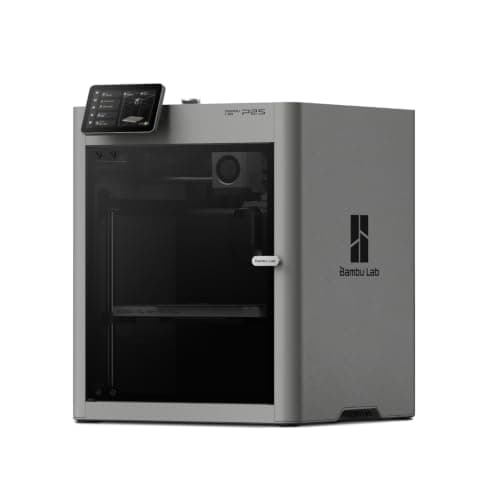 Bambu Lab P2S256 x 256 x 256 mm Bambu Lab P2S256 x 256 x 256 mm | Best overall | 8.5 | $569.00 - Check price on Amazon |
| 2 | 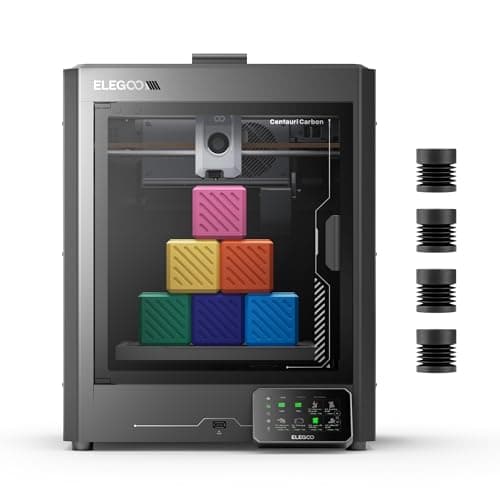 Elegoo Centauri Carbon256 x 256 x 256 mm Elegoo Centauri Carbon256 x 256 x 256 mm | Cheapest we would buy | 8.3 | $298.99 - Check price on Amazon |
| 3 | 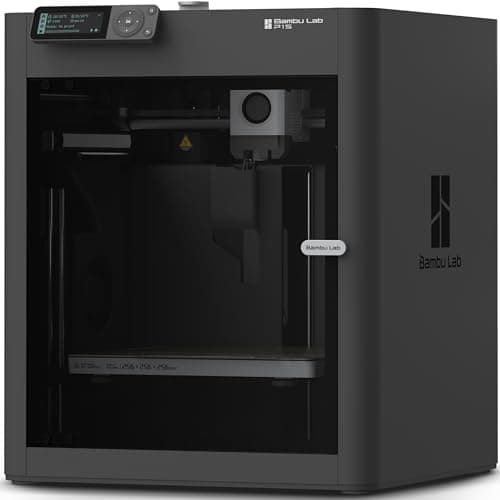 Bambu Lab P1S256 x 256 x 256 mm Bambu Lab P1S256 x 256 x 256 mm | Best value while it lasts | 8.4 | $399.00 - Check price on Amazon |
| 4 | 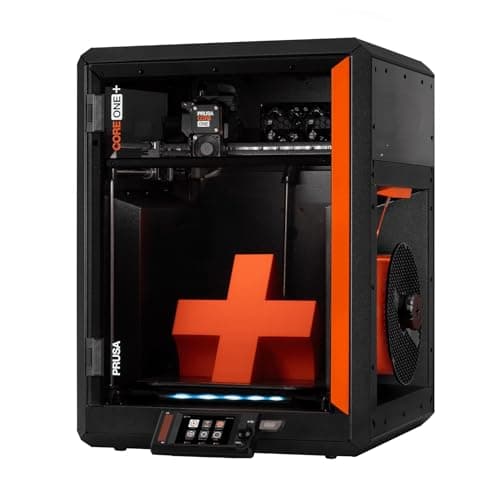 Prusa CORE One+250 x 220 x 270 mm Prusa CORE One+250 x 220 x 270 mm | Best if you intend to keep it a decade | 7.4 | $1,549.00 - Check price on Amazon |
#1 · Best overall
Bambu Lab P2S
Bambu Lab · An enclosed printer bought to keep, not to learn on
The P1S rebuilt: the same 256 mm cubed enclosed box, a hotter plate, a faster head and a cooling system that draws outside air so the door can stay shut on PLA. It is the enclosed Bambu to buy if you are buying one to keep, and it is still more machine than a first month needs.
#ad Price as of September 14, 2026, from Amazon. Prices change. How we make money.
What it actually is
An enclosed CoreXY printer — the head moves in two axes while the plate only rises, and a box surrounds the whole thing. The box holds heat, which is what keeps plastics that shrink as they cool stuck to the plate, and it holds most of the noise and smell as well.
Does it fit this page?
The widest published envelope at a sane price: a 110 C plate, a rated 40 mm3/s flow, a carbon filter rated for VOC and particulate filtration, and an airflow system Bambu Lab says lets you print PLA with the door shut - which is the one thing enclosed machines have historically been bad at.
What the manufacturer states
| Figure | Value | Source |
|---|---|---|
| Build volume | 256 x 256 x 256 mm | Bambu Lab P2S technical specifications |
| Enclosure | Enclosed; plastic and glass outer frame, plastic and steel chassis | Bambu Lab P2S technical specifications |
| Max nozzle temperature | 300 C | Bambu Lab P2S technical specifications |
| Max heatbed temperature | 110 C | Bambu Lab P2S technical specifications |
| Max toolhead speed | 600 mm/s | Bambu Lab P2S technical specifications |
| Max toolhead acceleration | 20,000 mm/s2 | Bambu Lab P2S technical specifications |
| Max hot end flow | 40 mm3/s | Bambu Lab P2S technical specifications |
| Nozzle | Hardened steel, 0.4 mm included; 0.2, 0.6 and 0.8 mm supported | Bambu Lab P2S technical specifications |
| Filaments supported | PLA, PETG, ABS, ASA, TPU, PET, PA, PC, PVA and carbon or glass fiber reinforced grades | Bambu Lab P2S technical specifications |
| Filtration | Activated carbon; VOC and particulate filtration supported | Bambu Lab P2S technical specifications |
| Physical dimensions | 392 x 406 x 478 mm | Bambu Lab P2S technical specifications |
| Net weight | 14.9 kg | Bambu Lab P2S technical specifications |
| Max power | 1000 W at 110 V | Bambu Lab P2S technical specifications |
Read from Bambu Lab, P2S technical specifications on 2026-09-04. Where a manufacturer does not publish a figure, there is no row for it here.
What is good about it
- Enclosed, with an activated carbon filter Bambu Lab rates for VOC and particulate filtration — the version of ABS printing that belongs in a room you sit in
- The Adaptive Airflow System draws cool air from outside the chamber, so Bambu Lab states low-temperature filaments can be printed with the door closed
- A 110 C plate against the P1S's 100 C and a rated 40 mm3/s flow, so large parts in engineering plastics are less of a gamble
- Auto bed leveling, nozzle offset and flow calibration are all documented and automatic, so nothing about setup is harder than an A1's
What is not
- It is the most expensive machine on this site's beginner shortlist, and every advantage it holds is aimed at materials a first year does not reach
- 1000 W at 110 V while the plate heats — several times the draw of an A1 mini, and worth knowing before it shares a circuit with a space heater
- 14.9 kg and 478 mm tall, so it is a shelf machine rather than a desk machine
- Multi-color still means buying the AMS 2 Pro, so the headline price is not the multi-color price
Skip this one if
Skip it if you have not yet printed anything. The P2S is a better machine than an A1 in every measurable way and not a better first machine, because almost none of what it adds shows up in PLA. Buy it when a project names ABS, ASA or a fiber-filled filament out loud.
What we cannot tell you
We have not printed on this machine. How quiet it really is with the door shut, whether the carbon filter meaningfully changes the smell of ABS in a small room, and how the servo extruder holds up over a year are not answerable from a specification sheet.
How it scored for a beginner
- Setup out of the box8.5
- Auto-calibration9.5
- First-layer forgiveness9.0
- Parts and filament availability9.0
- Running cost6.5
- Help when it goes wrong9.0
Beginner fit 8.5 / 10. That is our editorial read of how well this suits someone buying their first printer, taken off the published specifications — not a test result, and not a verdict on absolute quality. It is deliberately not marked up as a rating in this page’s structured data. How we pick.
#2 · Cheapest we would buy
Elegoo Centauri Carbon
Elegoo · An enclosed printer without an enclosed-printer budget
An enclosed CoreXY printer at a price that used to buy an open frame. If the reason you are hesitating about a beginner machine is that you can already see yourself outgrowing it, this is the one that answers that.
#ad Price as of September 14, 2026, from Amazon. Prices change. How we make money.
What it actually is
A boxed CoreXY machine with a steel chassis and aluminum and glass panels. The enclosure holds chamber heat, which is what lets it handle materials that shrink and peel on an open frame.
Does it fit this page?
Elegoo publishes the highest ceiling here - a 320 C nozzle and a 110 C plate - and includes a hardened steel nozzle, at a price that competes with open-frame machines. The catch is a newer platform with less community troubleshooting behind it.
What the manufacturer states
| Figure | Value | Source |
|---|---|---|
| Build volume | 256 x 256 x 256 mm | Elegoo Centauri Carbon product specifications |
| Motion system | CoreXY | Elegoo Centauri Carbon product specifications |
| Enclosure | Fully enclosed; steel chassis with aluminum and glass shell | Elegoo Centauri Carbon product specifications |
| Maximum speed | 500 mm/s | Elegoo Centauri Carbon product specifications |
| Maximum acceleration | 20,000 mm/s2 (10,000 mm/s2 default) | Elegoo Centauri Carbon product specifications |
| Max nozzle temperature | 320 C | Elegoo Centauri Carbon product specifications |
| Max heated bed temperature | 110 C at 25 C ambient | Elegoo Centauri Carbon product specifications |
| Supported filament | PLA, PETG, ABS, ASA, TPU, PET, PC, PA and carbon or glass fiber reinforced grades | Elegoo Centauri Carbon product specifications |
| Bed leveling | 121-point auto-leveling; full-auto calibration | Elegoo Centauri Carbon product specifications |
| Print accuracy | +/- 0.1 mm | Elegoo Centauri Carbon product specifications |
| Machine size and weight | 398 x 404 x 490 mm, 17.5 kg | Elegoo Centauri Carbon product specifications |
| Rated power | 350 W at 110 V | Elegoo Centauri Carbon product specifications |
| Operating sound | 55 dB or below | Elegoo Centauri Carbon product specifications |
Read from Elegoo, Centauri Carbon product page on 2026-09-06. Where a manufacturer does not publish a figure, there is no row for it here.
What is good about it
- Fully enclosed at a price that competes with open-frame machines
- 20,000 mm/s2 rated acceleration, matching the enclosed Bambu
- 256 mm cubed — the same working envelope as an A1 or a P1S
- The enclosure contains noise and smell, which decides whether a printer can live in a bedroom
What is not
- A newer platform than the Bambu and Creality lines, so there is less community troubleshooting behind it
- An enclosure adds a heat-soak wait to PLA prints in a warm room
- Larger and heavier than any open-frame machine here
- Nothing about the enclosure makes the first print easier — it makes later prints possible
Skip this one if
Skip it if PLA is all you will ever print and your printer lives in a spare room. You are paying for a box you will not use. The enclosure earns its money on ABS, ASA and a shared living space, not on PLA in a garage.
What we cannot tell you
We have not printed on this machine. Chamber temperature in practice, panel fit and finish, and long-term CoreXY belt tension are not published numbers.
How it scored for a beginner
- Setup out of the box8.5
- Auto-calibration8.5
- First-layer forgiveness8.5
- Parts and filament availability7.5
- Running cost8.0
- Help when it goes wrong7.5
Beginner fit 8.3 / 10. That is our editorial read of how well this suits someone buying their first printer, taken off the published specifications — not a test result, and not a verdict on absolute quality. It is deliberately not marked up as a rating in this page’s structured data. How we pick.
#3 · Best value while it lasts
Bambu Lab P1S
Bambu Lab · A first printer for someone who already knows they want ABS or ASA
An enclosed CoreXY machine, which is a different class of thing from an A1: the bed stays still and the box holds heat, so the materials the A1 refuses become possible. It is more printer than a first-timer needs, and the right answer if you already know you want ABS.
#ad Price as of September 14, 2026, from Amazon. Prices change. How we make money.
What it actually is
A boxed printer using CoreXY motion — the print head moves in two axes while the bed only goes up and down. Keeping the bed still lets it move faster, and the enclosure keeps the chamber warm so plastics that shrink as they cool do not peel off the plate.
Does it fit this page?
The outgoing model, still listed new and still the least expensive route into a Bambu with a box. Same 256 mm cubed and the same automated setup as the P2S; you give up the hotter plate, the faster head and the new airflow system.
What the manufacturer states
| Figure | Value | Source |
|---|---|---|
| Build volume | 256 x 256 x 256 mm | Bambu Lab P1S technical specifications |
| Enclosure | Enclosed, plastic and glass | Bambu Lab P1S technical specifications |
| Max hot end temperature | 300 C | Bambu Lab P1S technical specifications |
| Max build plate temperature | 100 C | Bambu Lab P1S technical specifications |
| Max speed | 500 mm/s | Bambu Lab P1S technical specifications |
| Max acceleration | 20,000 mm/s2 | Bambu Lab P1S technical specifications |
| Nozzle | All-metal hot end, 0.4 mm included; 0.2, 0.6 and 0.8 mm optional | Bambu Lab P1S technical specifications |
| Filaments rated ideal | PLA, PETG, TPU, PVA, PET, ABS, ASA | Bambu Lab P1S technical specifications |
| Filaments rated capable | PA, PC | Bambu Lab P1S technical specifications |
| Air filter | Activated carbon | Bambu Lab P1S technical specifications |
| Physical dimensions | 389 x 389 x 458 mm | Bambu Lab P1S technical specifications |
| Net weight | 12.95 kg | Bambu Lab P1S technical specifications |
| Max power | 350 W at 110 V | Bambu Lab P1S technical specifications |
Read from Bambu Lab, P1S product page and specification table on 2026-09-06. Where a manufacturer does not publish a figure, there is no row for it here.
What is good about it
- Enclosed, so ABS and ASA are on the menu rather than off it
- CoreXY at 20,000 mm/s2 acceleration — twice the A1's rated figure
- Same 256 mm cubed volume as the A1 in a smaller footprint, because the bed does not travel
- The enclosure also contains most of the noise and the smell, which matters if it lives in a room you sit in
What is not
- Noticeably more expensive than an A1 for a beginner who will print PLA for a year
- The enclosure makes routine maintenance fiddlier than an open frame
- Nothing about it is easier to learn on than an A1 mini — it is just more capable
- Multi-color is again a separate AMS purchase
Skip this one if
Skip it if your honest answer to 'what will you print' is 'I am not sure yet'. Everything the P1S adds over an A1 is aimed at materials a beginner should not start with. Buy it when a specific project demands ABS, not before.
What we cannot tell you
We have not printed on this machine. Chamber temperature in a cold room, real ABS warping behavior and long-term fan noise are not on any specification sheet.
How it scored for a beginner
- Setup out of the box8.5
- Auto-calibration9.5
- First-layer forgiveness9.0
- Parts and filament availability9.0
- Running cost7.0
- Help when it goes wrong9.0
Beginner fit 8.4 / 10. That is our editorial read of how well this suits someone buying their first printer, taken off the published specifications — not a test result, and not a verdict on absolute quality. It is deliberately not marked up as a rating in this page’s structured data. How we pick.
#4 · Best if you intend to keep it a decade
Prusa CORE One+
Prusa Research · Somebody who wants to own the machine, not just its output
The machine people mean when they say they want something they can fix. Prusa publishes a 250 x 220 x 270 mm enclosed CoreXY with an actively controlled chamber up to 55 C, and says plainly that nothing on it is glued and everything comes apart with a screwdriver.
#ad Price as of September 14, 2026, from Amazon. Prices change. How we make money.
What it actually is
A fully enclosed CoreXY printer with a heated, ventilated chamber, built around an all-steel structural enclosure. It is designed to be disassembled and repaired, with spare parts stocked for years, and it costs several times what a first printer should.
Does it fit this page?
The only machine here with an actively controlled chamber, heated to 55 C and monitored continuously. Prusa also states nothing is glued, it comes apart with a screwdriver and parts are stocked for years. It costs several times the others, and that promise is what you are paying for.
What the manufacturer states
| Figure | Value | Source |
|---|---|---|
| Build volume | 250 x 220 x 270 mm (14.9 liters) | Prusa Research CORE One+ product page |
| Motion and frame | Fully enclosed CoreXY; all-steel structural enclosure | Prusa Research CORE One+ product page |
| Chamber | Actively controlled, heats to 55 C, with smart ventilation | Prusa Research CORE One+ product page |
| Materials | ASA, ABS, PC, PA and other advanced materials, plus standard 1.75 mm filament | Prusa Research CORE One+ product page |
| Vibration control | Input Shaper firmware compensation | Prusa Research CORE One+ product page |
| Serviceability | Nothing glued; disassembles with a screwdriver, spare parts stocked for years | Prusa Research CORE One+ product page |
Read from Prusa Research, CORE One+ product page on 2026-09-13. Where a manufacturer does not publish a figure, there is no row for it here.
What is good about it
- An actively heated chamber to 55 C, which is a genuine step beyond the passively warm boxes in the band below
- Built to be repaired: Prusa states nothing is glued, everything comes apart with a screwdriver, and parts are stocked for years
- Prusa publishes 50 percent less desk space than an MK4S in an enclosure with 30 percent more print volume
- Smart ventilation means the door stays shut for PLA rather than being propped open
What is not
- It costs several times what this site's beginner picks cost, and nothing about it makes a first month easier
- 250 x 220 x 270 mm is less floor area than the 256 mm cubed machines it competes with, even though total volume is higher
- The repairability that justifies the price is worth nothing to somebody who never intends to open the machine
- Sold on Amazon by Amazon rather than by Prusa, so warranty and support routing is worth checking before you order
Skip this one if
Skip it if this is your first printer. Everything you are paying for - the chamber, the steel, the serviceability - is aimed at somebody who already knows what they want to print and expects to keep the machine for a decade. Buy an A1 mini and come back in two years.
What we cannot tell you
We have not printed on this machine. Whether the chamber control makes ABS genuinely uneventful, how loud it is, and whether the repairability premium pays back over years are all owner questions we cannot answer from a specification page.
How it scored for a beginner
- Setup out of the box8.0
- Auto-calibration9.0
- First-layer forgiveness8.5
- Parts and filament availability10.0
- Running cost6.0
- Help when it goes wrong9.5
Beginner fit 7.4 / 10. That is our editorial read of how well this suits someone buying their first printer, taken off the published specifications — not a test result, and not a verdict on absolute quality. It is deliberately not marked up as a rating in this page’s structured data. How we pick.
How these were picked
We have not printed on these machines and we do not pretend to have. What we did was read each manufacturer’s own specification page, take their stated build volume, temperatures and speeds, check that every pick genuinely fits the job in this page’s title, confirm it is still being sold, and pull a live price rather than a remembered one. Every figure names the source it came from, so you can check it yourself in about a minute.
How we pick sets out the full method, including what would change a ranking.
Questions people actually ask
+−What is the point of an enclosed 3D printer?
Two things. It holds chamber heat so materials that contract as they cool — ABS, ASA, polycarbonate, nylon — stay stuck to the plate instead of lifting at the corners. And it contains most of the noise and smell, which decides whether a printer can live in a room with people in it.
+−Do I need an enclosed printer for PLA?
No, and a warm chamber is mildly unhelpful for PLA, which prefers to be cooled quickly. Enclosed machines vent for that reason. If PLA and PETG are your materials, an open-frame printer is the better buy.
+−What is the cheapest enclosed 3D printer worth buying?
The Elegoo Centauri Carbon on published specification, or the outgoing Bambu Lab P1S if you want the larger community behind you. Both give you 256 mm cubed inside a box with automated setup. We compare them directly on Centauri Carbon against the P1S.
+−Does an enclosure make prints better?
Not in PLA. It makes different prints possible by keeping warping materials on the plate. A PLA part from an enclosed machine and the same part from a good open-frame machine are much the same object.
+−Do enclosed printers filter the air?
Some do and some do not, so check before ordering. Bambu Lab fits an activated carbon filter to the P1S and rates the P2S filter for VOC and particulate filtration; Prusa offers optional HEPA filtration; Elegoo does not publish a filter on the Centauri Carbon specification sheet.