Roundup
The Best 3D Printers for Kids
There is one question that decides this, and it is not about the child's age. It is whether an adult is going to be involved anyway — because if the answer is yes, a purpose-built kids' printer is usually the wrong buy.
By Scooter M. · Published · Last reviewed
How this page is funded: the buy links below are affiliate links. If you buy through one we earn a commission, at no extra cost to you. It does not change the order of the picks or a word of what we say about them. Full disclosure.
Printers we claim to have tested: 0. Everyone in this category says they tested twenty machines. We have not tested any, and we would rather say so. What we did instead is on this page: the manufacturer’s own published specification for every pick, cited and dated; the arithmetic on what it costs to run, with the inputs shown; a live price rather than a remembered one; and a plain answer on who should skip each machine.
The short answer
Ask one question: will an adult be involved anyway? If no — the child will drive it alone — buy a purpose-built kids’ printer with no slicer to learn and an unheated bed. If yes, buy a normal beginner machine like the A1 mini: it is bigger, more capable, better value, and it will still be useful when the child has moved on.
Why that question decides it
A kids’ printer is not a small version of a normal printer. It is a different product that trades away almost all the capability in exchange for removing every decision. The Toybox publishes a 70 × 80 × 90 mm build volume — about a tenth of an A1 mini’s by volume — an unheated plate, PLA only, and 60 mm/s.
Every one of those is a deliberate safety-and-simplicity trade, and they are the right trades if the point is that a nine-year-old can choose a model and press a button without help. They are the wrong trades if a parent was always going to be setting up the print anyway, because then you have paid for simplification nobody used and given up nine-tenths of the build volume for it.
The safety facts, stated plainly
- The nozzle is hot. 300 °C on most beginner machines. That is a burn, not a fire risk, and it is the single thing to physically manage. An enclosed machine or a high shelf handles it; a kids’ printer sidesteps it by design.
- The bed is warm to hot. Up to 80 or 100 °C on normal machines. Purpose-built kids’ machines use an unheated plate specifically to avoid this, which is also why they are limited to PLA.
- PLA is the right material and not only for printing reasons. It prints at lower temperatures and does not produce the smell ABS does. A first year should be a PLA year for everybody, and doubly so around children.
- Small printed parts are a choking hazard for very young children in exactly the way any small toy is. This is not a 3D printing problem; it is a small-object problem, and it applies to the output rather than the machine.
- Moving parts pinch. An open-frame machine has belts and a moving plate at child height on a table. An enclosure solves this too.
What age is this actually for?
We are not going to invent an age cutoff. What we can say is what the decision hinges on, and it is not birthdays: it is whether the child can read a screen, follow a two-step process, and be trusted not to touch a hot part. Some eight-year-olds clear that bar and some thirteen-year-olds do not.
The one age-adjacent thing worth knowing is that a child who is genuinely interested — who wants to design their own models rather than print other people’s — will outgrow a purpose-built kids’ machine inside a year, because the build volume and the absence of a real slicer become the limits. If you can already see that coming, skip straight to a normal beginner printer.
What to buy with it
PLA in colors the child chose, which matters more than it sounds. And if you have gone with a normal beginner machine, read what to print first together — the models that teach the most per gram are also the ones that finish quickly, which is exactly what holds a child’s attention.
Quick picks
Ranked on how well each one fits the job in this page's title, read off the manufacturer's own published specifications. Tap any row for the full write-up, including who should skip it.
| # | Product | Best for | Beginner fit | Price |
|---|---|---|---|---|
| 1 | 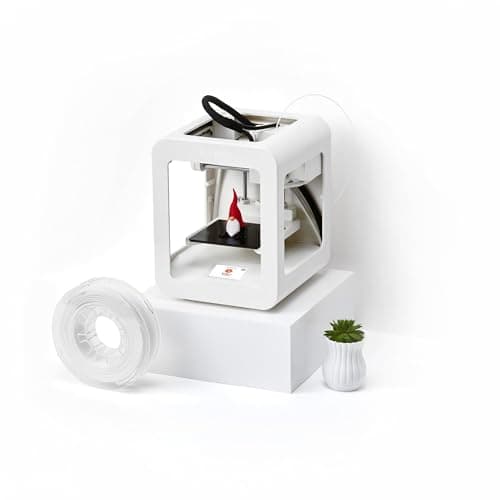 Toybox 3D Printer70 x 80 x 90 mm Toybox 3D Printer70 x 80 x 90 mm | Best for a child alone | 7.0 | $354.99 - Check price on Amazon |
| 2 | 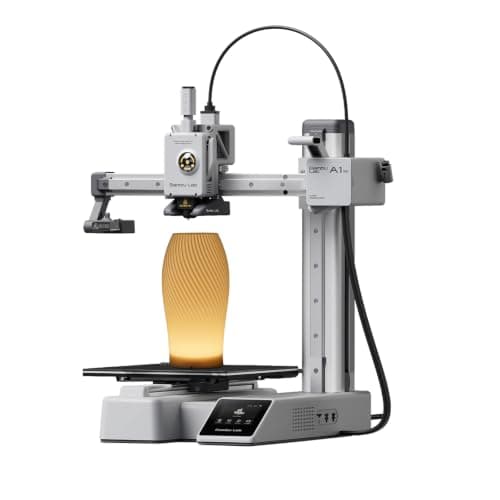 Bambu Lab A1 mini180 x 180 x 180 mm Bambu Lab A1 mini180 x 180 x 180 mm | Best with an adult involved | 9.2 | $249.00 - Check price on Amazon |
| 3 | 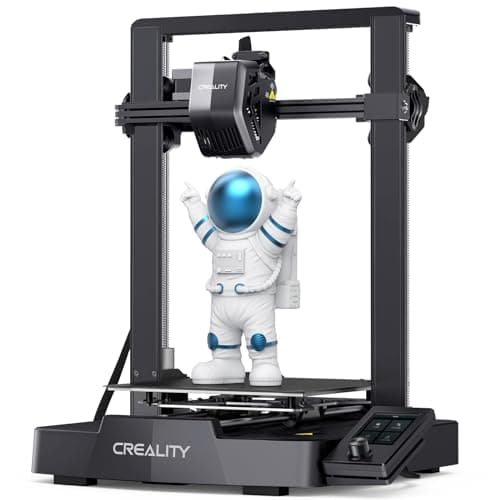 Creality Ender-3 V3 SE220 x 220 x 250 mm Creality Ender-3 V3 SE220 x 220 x 250 mm | Best for a teenager who wants to tinker | 8.0 | $199.00 - Check price on Amazon |
#1 · Best for a child alone
Toybox 3D Printer
Toybox · A child printing without an adult in the room
Not really a 3D printer in the sense the rest of this site means. It is a one-button toy factory a child can drive alone, and it is the only machine here where that is the design goal rather than a side effect.
#ad Price as of October 19, 2026, from Amazon. Prices change. How we make money.
What it actually is
A small, simple printer with no slicing software to learn: a child picks a model in an app and presses print. The build platform is unheated, which is why it only takes PLA and why it is safe to leave a child near.
Does it fit this page?
The only pick here designed around a child rather than adapted for one: no slicer to learn, an unheated magnetic plate, PLA only, and a 3 kg body. Its 70 x 80 x 90 mm build volume is the price of that simplicity.
What the manufacturer states
| Figure | Value | Source |
|---|---|---|
| Build volume | 70 x 80 x 90 mm | Toybox published specifications |
| Materials | PLA only, 1.75 mm | Toybox published specifications |
| Build platform | Magnetic, unheated | Toybox published specifications |
| Machine footprint | 190 x 190 x 230 mm | Toybox published specifications |
| Weight | 3 kg | Toybox published specifications |
| Print speed | 60 mm/s | Toybox published specifications |
Read from Toybox, product information on 2026-09-01. Where a manufacturer does not publish a figure, there is no row for it here.
What is good about it
- No slicer to learn — a child can go from idea to print without an adult
- Unheated bed and a 3 kg body, which is the safety story in one line
- 70 x 80 x 90 mm is exactly the size of the toys children actually want
- The only machine here designed around a child rather than adapted for one
What is not
- 70 x 80 x 90 mm is a tenth the volume of an A1 mini and it is not upgradeable
- PLA only, on an unheated plate — the material list ends there
- 60 mm/s is slow enough that a child will notice waiting
- A ten-year-old who is genuinely interested will outgrow it inside a year
Skip this one if
Skip it if the child is old enough to want to design their own models, or if the adult in the house also wants to print things. In both cases an A1 mini with supervision is the better machine and usually the better value.
What we cannot tell you
We have not used this machine with a child. How long the novelty lasts, how often an adult is actually called over, and print reliability over months are the questions that matter here and none of them are on a spec sheet.
How it scored for a beginner
- Setup out of the box10.0
- Auto-calibration8.0
- First-layer forgiveness8.0
- Parts and filament availability6.0
- Running cost8.0
- Help when it goes wrong6.0
Beginner fit 7.0 / 10. That is our editorial read of how well this suits someone buying their first printer, taken off the published specifications — not a test result, and not a verdict on absolute quality. It is deliberately not marked up as a rating in this page’s structured data. How we pick.
#2 · Best with an adult involved
Bambu Lab A1 mini
Bambu Lab · A genuine first printer
The one to get if you have never done this before. It calibrates itself before every print — bed mesh, Z-offset, flow, resonance — so the part of 3D printing that used to defeat beginners is a step you never see. The build volume is the price you pay.
#ad Price as of October 19, 2026, from Amazon. Prices change. How we make money.
What it actually is
A small open-frame filament printer. Filament is a 1.75 mm plastic string on a spool; the machine melts it and draws your object one layer at a time. Open-frame means there is no box around it, which is fine for PLA and a limitation for materials that warp.
Does it fit this page?
If a parent is going to be in the loop anyway, this is a far better machine for the same household: 180 mm cubed rather than 70 x 80 x 90 mm, automatic calibration, and it will still be useful when the child has moved on.
What the manufacturer states
| Figure | Value | Source |
|---|---|---|
| Build volume | 180 x 180 x 180 mm | Bambu Lab A1 mini technical specifications |
| Max hot end temperature | 300 C | Bambu Lab A1 mini technical specifications |
| Max build plate temperature | 80 C | Bambu Lab A1 mini technical specifications |
| Max toolhead speed | 500 mm/s | Bambu Lab A1 mini technical specifications |
| Max toolhead acceleration | 10,000 mm/s2 | Bambu Lab A1 mini technical specifications |
| Filaments rated ideal | PLA, PETG, TPU, PVA | Bambu Lab A1 mini technical specifications |
| Filaments not recommended | ABS, ASA, PC, PA, PET, carbon/glass fiber reinforced | Bambu Lab A1 mini technical specifications |
| Machine dimensions | 347 x 315 x 365 mm | Bambu Lab A1 mini technical specifications |
| Net weight | 5.5 kg | Bambu Lab A1 mini technical specifications |
| Max power | 150 W | Bambu Lab A1 mini technical specifications |
Read from Bambu Lab, A1 mini technical specifications on 2026-09-01. Where a manufacturer does not publish a figure, there is no row for it here.
What is good about it
- Full auto-calibration on every print, per Bambu Lab's own specification — no paper-under-the-nozzle ritual
- Rated ideal for PLA, PETG, TPU and PVA, which covers everything a beginner should print in year one
- 150 W maximum power draw is the lowest of any printer on this site, so running cost is trivial
- 5.5 kg and 347 mm wide — it fits on a desk without rearranging the room
What is not
- 180 mm cubed is genuinely small. A full-size helmet or a large cosplay prop will not fit
- Bambu Lab rates ABS, ASA, PC and fiber-reinforced filaments as not recommended on this machine
- The multi-color AMS lite is a separate purchase, so the headline price is not the multi-color price
- Bambu Lab's own Amazon store lists this machine bundled with an LED lamp kit rather than on its own, so the price on our button is for that bundle. The bare printer is sold direct on Bambu Lab's store
- Open frame, so it is at the mercy of a draft from a window or an air conditioning vent
Skip this one if
Skip it if you already know the thing you want to print is bigger than a shoebox, or if you specifically want ABS or a carbon-fiber-filled filament. Bambu Lab itself lists those materials as not recommended here, and buying a machine you intend to use outside its rated envelope is how a first printer becomes a frustrating one.
What we cannot tell you
We have not printed on this machine. Long-term reliability, real-world noise in a quiet room, and how the textured plate holds up after a year are all things we cannot honestly report without owning one.
How it scored for a beginner
- Setup out of the box9.5
- Auto-calibration10.0
- First-layer forgiveness9.5
- Parts and filament availability9.0
- Running cost10.0
- Help when it goes wrong9.0
Beginner fit 9.2 / 10. That is our editorial read of how well this suits someone buying their first printer, taken off the published specifications — not a test result, and not a verdict on absolute quality. It is deliberately not marked up as a rating in this page’s structured data. How we pick.
#3 · Best for a teenager who wants to tinker
Creality Ender-3 V3 SE
Creality · The smallest sensible amount of money
The cheap way in, and a genuinely modern one: auto bed leveling with CR Touch, automatic Z-offset from a strain sensor, and a direct-drive extruder. You will still learn more about your printer than an A1 owner does. Whether that is a feature or a cost is the whole decision.
#ad Price as of October 19, 2026, from Amazon. Prices change. How we make money.
What it actually is
An open-frame bed-slinger — the plate moves back and forth under a head that moves side to side and up. It is the classic hobby-printer layout, and this generation added the automatic setup steps the older Enders famously lacked.
Does it fit this page?
A machine with visible mechanics that rewards understanding it. For an older child who is interested in how things work rather than only in what comes out, that is a feature and not a compromise.
What the manufacturer states
| Figure | Value | Source |
|---|---|---|
| Build volume | 220 x 220 x 250 mm | Creality Ender-3 V3 SE product specifications |
| Maximum print speed | 250 mm/s | Creality Ender-3 V3 SE product specifications |
| Typical print speed | 180 mm/s | Creality Ender-3 V3 SE product specifications |
| Acceleration | 2,500 mm/s2 | Creality Ender-3 V3 SE product specifications |
| Leveling | CR Touch auto leveling with strain-sensor Z-offset | Creality Ender-3 V3 SE product specifications |
| Extruder | Sprite direct extruder | Creality Ender-3 V3 SE product specifications |
| Filament diameter | 1.75 mm | Creality Ender-3 V3 SE product specifications |
Read from Creality, Ender-3 V3 SE product page on 2026-09-01. Where a manufacturer does not publish a figure, there is no row for it here.
What is good about it
- 220 x 220 x 250 mm is larger in every axis than the A1 mini
- Automatic bed leveling and Z-offset, which is the thing older Enders did not have
- The largest parts and community ecozystem of any machine here, by a distance
- Some assembly is required, and you will understand your printer better for it
What is not
- 250 mm/s maximum and 2,500 mm/s2 acceleration — a fraction of the A1's rated figures
- Not fully assembled out of the box, so first-print day is longer
- No filament run-out safety net of the kind Bambu specifies on the A1 series
- More of the tuning is yours to do, which is the trade for the price
Skip this one if
Skip it if the reason you are buying a printer is that you want to print things, not to own a printer. This machine is excellent value and it will ask more of you than an A1 mini will. If your patience for troubleshooting is low, spend the difference.
What we cannot tell you
We have not printed on this machine. How often the auto leveling needs re-running, the quality of the bundled build surface after a hundred prints, and assembly time for someone who has never built one are all outside what the specification tells you.
How it scored for a beginner
- Setup out of the box7.0
- Auto-calibration8.0
- First-layer forgiveness7.5
- Parts and filament availability10.0
- Running cost9.0
- Help when it goes wrong10.0
Beginner fit 8.0 / 10. That is our editorial read of how well this suits someone buying their first printer, taken off the published specifications — not a test result, and not a verdict on absolute quality. It is deliberately not marked up as a rating in this page’s structured data. How we pick.
How these were picked
We have not printed on these machines and we do not pretend to have. What we did was read each manufacturer’s own specification page, take their stated build volume, temperatures and speeds, check that every pick genuinely fits the job in this page’s title, confirm it is still being sold, and pull a live price rather than a remembered one. Every figure names the source it came from, so you can check it yourself in about a minute.
How we pick sets out the full method, including what would change a ranking.
Questions people actually ask
+−Is a 3D printer safe for a child?
With supervision, yes. The nozzle reaches around 300 °C and the bed reaches 80 to 100 °C on a normal machine, so the risk is burns rather than fire. Purpose-built children’s printers use an unheated plate and PLA only to remove most of that, which is exactly why they exist and exactly why they are limited.
+−Is a 3D printer worth it for kids?
If the child has specifically and repeatedly asked for one, yes. If it is an adult’s idea of a good hobby for them, be more cautious — the enthusiasm curve is real and month three is where it either sticks or does not. Filament and accessories for a machine they already have is a much safer purchase than a machine they did not ask for.
+−Should I buy a kids' 3D printer or a normal one?
A normal one, unless the child will genuinely be operating it alone. A kids’ machine trades away roughly nine-tenths of the build volume and all of the material range to remove decisions. That is a good trade only if nobody was going to make those decisions anyway.